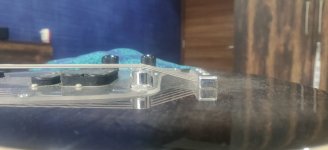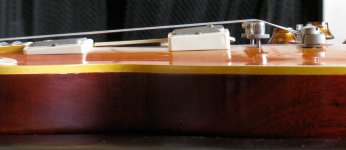




The reason for doing this on Les Pauls were as follows:
The break angle that the string makes on the actual tune-o-matic component is quite acute. As a result, this results in more string breakage. When you thread the string over the stopbar, you solve this problem by increasing the angle of the string over the tune-o-matic bit. Additionally, this also results according to many in lower string tension (Apologies if this isn't the correct physics term), which is why Bonamassa, Billy Gibbons, Jimmy Page, etc., did this.
The problem of the string having a small break angle doesn't exist on the music-man. The tune-o-matic part is sunk slightly into the body and doesn't stick up the way it does on Gibsons. As a result, I don't think there's any need to do this. Additionally, another bit that you have to consider is that the stopbar on the Gibson's is kind of rounded so the string does actually have a fairly smooth surface to sit on. With the square-ish stopbar on the Morse, I doubt you'd get strings to sit perfectly if you followed the Gibbons or Bonsamassa method of stringing.
Edit: I realised I didn't answer your question! Lol. No, it would not screw up the intonation. That's because the two points where the string makes contact with won't change.