


Question Lefty Silhouette Special

Hoagy

New member
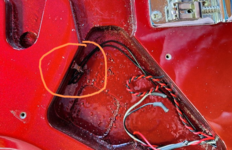
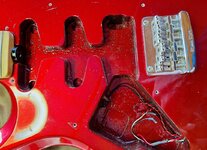
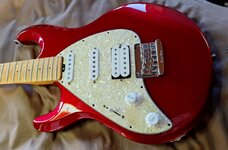
Interior.jpgBody.jpgHi. I recently acquired a 1997 Silhouette Special, quite rare in lefty, I think. The previous owner had 'upgraded' the pickups to an EMG Active set, however he still had the original pickups and wiring loom including the silent circuit and was happy to hand it all over, so I am presently re-fitting them.
I have a question regarding shielding. I would normally put copper tape in all of the cavities, but I wonder if there is already shielding paint in them. Would that be the case?
Thanks for any help.
 
Mmmh....I do not see any shielding paint there...to be honest...
I've done the job on my Silho with shielding copper tape and it's dead silent.
Remember to put the copper tape on the back of the whole pickguard as well and to be sure it will be in full contact with the tape in the cavities.
 
Mmmh....I do not see any shielding paint there...to be honest...
I've done the job on my Silho with shielding copper tape and it's dead silent.
Remember to put the copper tape on the back of the whole pickguard as well and to be sure it will be in full contact with the tape in the cavities.
That's because the shielding is underneath the paint ...
 
Guys,sorry but....how should a shielding UNDER A PAINT COVER work?
Paint coat over a shielding would make the shielding useless...because paint is not conductive....
In my experience, shielding paint is almost useless itself...it does show very poor shielding and conductive properties (copper tape is way better!)...if I put some paint over it, it will work even worst...
 
Guys,sorry but....how should a shielding UNDER A PAINT COVER work?
Paint coat over a shielding would make the shielding useless...because paint is not conductive....
In my experience, shielding paint is almost useless itself...it does show very poor shielding and conductive properties (copper tape is way better!)...if I put some paint over it, it will work even worst...
No. Shielding paint can be just as effective as copper tape. It's widely and very effectively used in many industries. And non-conducting layers on top do not affect its efficacy. Music Man have some of the best engineers in the guitar industry and have been doing this for a long time. They got this right.

Apply shielding, then a screw a solder lug washer to the inside wall of the cavity (see photo). That lug washer will be the grounding for the shield. Then shoot color coats. When paint work is done, solder a grounding wire to the solder lug washer. The sdvantage of doing this is that the color paint acts as an insulating layer between the conductive shielding and the controls so you can never have accidental short to ground if any wires or switch terminals contact the sides or bottom of the cavity.


Cavity ground.png
 
No. Shielding paint can be just as effective as copper tape. It's widely and very effectively used in many industries. And non-conducting layers on top do not affect its efficacy. Music Man have some of the best engineers in the guitar industry and have been doing this for a long time. They got this right.

Apply shielding, then a screw a solder lug washer to the inside wall of the cavity (see photo). That lug washer will be the grounding for the shield. Then shoot color coats. When paint work is done, solder a grounding wire to the solder lug washer. The sdvantage of doing this is that the color paint acts as an insulating layer between the conductive shielding and the controls so you can never have accidental short to ground if any wires or switch terminals contact the sides or bottom of the cavity.


View attachment 43139
I've got the point, mate.
One never stops learning! :)

Personally, I prefer copper tape, also because it makes it simple (to me) to shield the pickguard anche "close" the Faraday cage with the cavities.
But that's a matter of taste on one side and building process at factory on the other (where you cannot "loose time" applying copper tape manually on every instrument, of course...spraying or applying paints it's faster a lot!).
 
The old pickguards were shielded with a thin layer of aluminum. They're connected to the pots that pass through them, which are grounded to the (already shielded) cavity when you solder the output wires or connect the Molex connectors. So you already have a Faraday cage like that. (If your pickguard isn't shielded you can certainly do that.)

In the back cavities of the newer instruments, the cover plate is metal. It makes physical contact to a ground wire, so you have a fully shielded cavity.
 
The old pickguards were shielded with a thin layer of aluminum. They're connected to the pots that pass through them, which are grounded to the (already shielded) cavity when you solder the output wires or connect the Molex connectors. So you already have a Faraday cage like that. (If your pickguard isn't shielded you can certainly do that.)

In the back cavities of the newer instruments, the cover plate is metal. It makes physical contact to a ground wire, so you have a fully shielded cavity.
This place is a pit of knowledge and sharing!
 
Back
Top