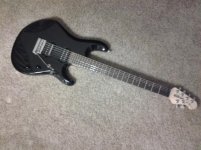
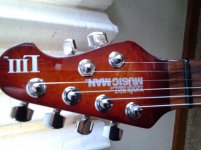
I've owned more than a few basses in my day, all wood/trussrod construction, and I have found that they all have them to some degree. It IS voodoo - or biology to be exact (wood is a living material). Here is what I've found in my own experiences:
1. Graphite reinforced necks CAN have dead spots and they can be just as bad as any of the non-graphite reinforced variety. I'm not talking about the completely graphite neck, but the wood necks with the graphite reinforcement.
2. It doesn't matter how high or low end the bass is - they are still prone. In my experience, basses with better pickups/electronics can actually make the dead spot sound more clear and definite! I've picked up $300 basses with a mild dead spot and $3000 basses with severe ones.
3. Almost all dead spots I've encountered are on the G string, somewhere between the 4th and 9th fret.
4. The two Sterlings I've owned were the best - the dead spots were VERY mild and the note on that fret was still completely useable.
5. I've recently been told that a different neck can eliminate dead spots (It only makes sense, I guess).
Anyone ever tried a Fat finger - I'm thinking of trying one to see if and what results it has.
It's also interesting that dead spots are not something you hear about when you first start playing bass. Not a lot of bassists talk about them and I often wondered if I was just unlucky and/or wasn't careful enough when selecting basses. I'm starting to believe there are a lot more dead spots out there that people aren't willing to admit to, don't know about, or don't care about....

BTW - I recently read some of Garry Willis' comments and he claims that pretty much all wooden bass necks with a truss rod have dead spots. Interesting, check it out for September "ask section":
www.garywillis.com/pages/ask/askindex.html